
Hooked Needlewood, Striped Hakea, Needlewood
Proteaceae.
Hakea.
Tephrosperma, from Greek tephro, ash grey and sperma, seed, referring to ash-coloured seed (not always apparent).
300mm.
Slow.
3-12m.
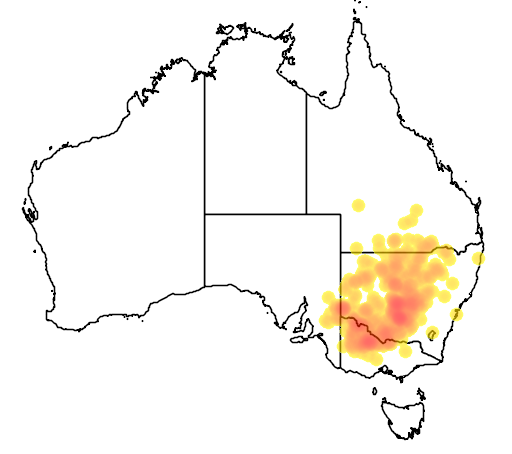
Not widespread, but more common in west of region. Noted in the areas Brookong; Boree and Narrandera-Morundah-Galore-Collingullie.
This specie has been identified in the following Australian states: Qld, NSW, ACT, Vic, SA.
Usually on coarse-textured soils, as individual trees or in dense thickets of shrubby plants.
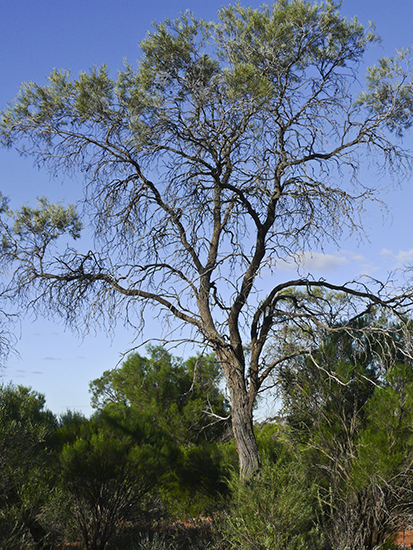
Small tree or shrub 3-12m high. Often with drooping branches. Sparse crown of cylindrical leaves 2-9cm long.
Distinguished from Needlewood (Hakea leucoptera) by curved points on its leaves, minutely hairy flower stems and dark-coloured seed wing.
Very hardy. Tolerates moderate frost.
Cream, spring. Attractive spider-like flowers.
Easily collected when seed available, generally winter-spring. Seeds retained on plants.
Most Hakeas easily grown from fresh seeds which usually germinate in 3-6 weeks. Direct sow into pots (2 seeds per pot) or into field.
Mainly from root suckers, particularly when protected from grazing.
Deep-red with attractive “cartwheel” pattern. Turned to produce small ornaments.
Excellent cover for small native birds. Flowers are a food source for honeyeaters.
Attractive woody fruit, and beautiful flowers if mass-planted. Very hardy in cultivation.
Nectar can be sucked from flowers or mixed with water for sweet drink.