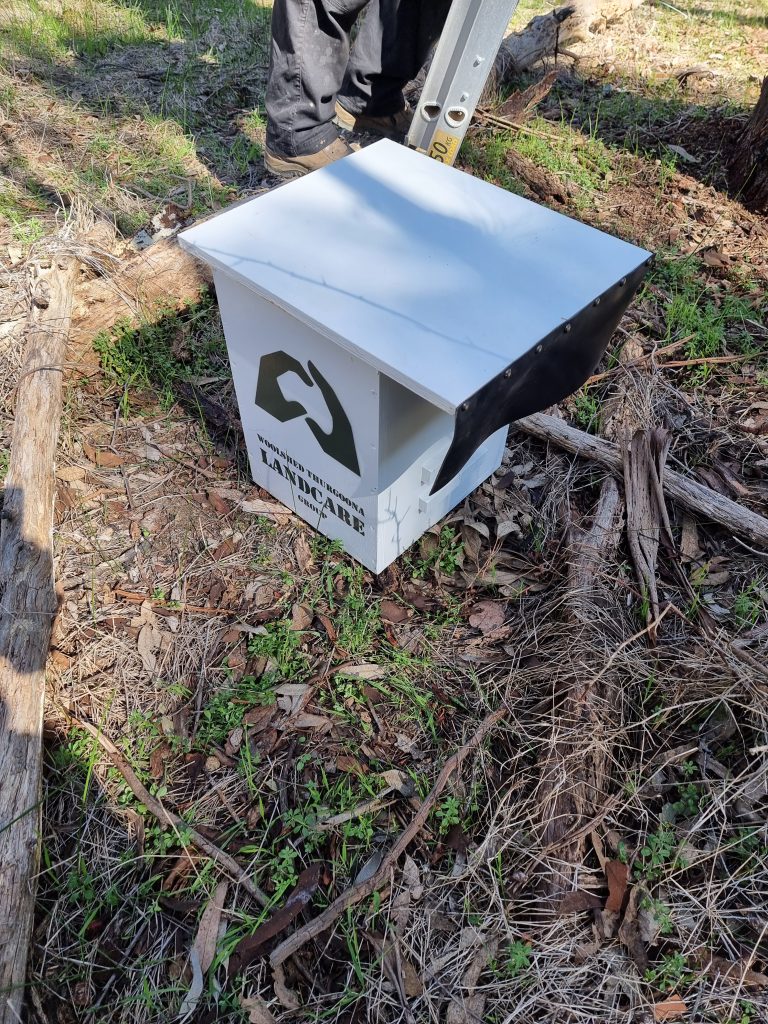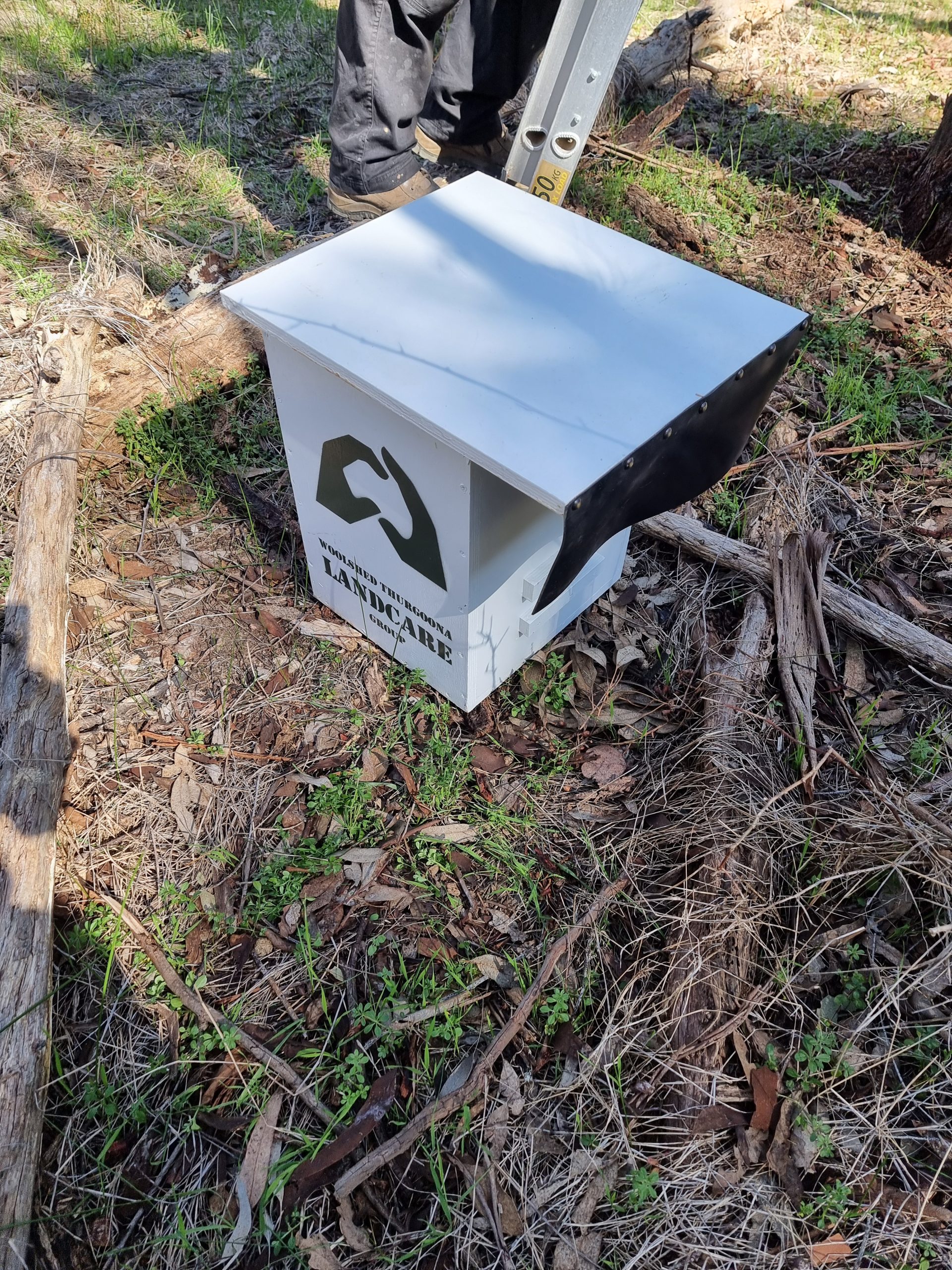
The Woolshed Thurgoona Landcare Group (WTLG) Nest Box Project installs, monitors and maintains nest boxes for squirrel gliders and other native species such as micro-bats and possums.
The Woolshed Thurgoona Landcare Group (WTLG) Nest Box Project installs, monitors and maintains nest boxes for squirrel gliders and other native species such as micro-bats and possums. We operate across Thurgoona, Wirlinga, Lake Hume, Table Top, Ettamogah and Himalaya estate.
Over the past ten years, specially designed nest boxes for each species have been installed in natural areas by WTLG, Albury City Council and other community groups and organisations.
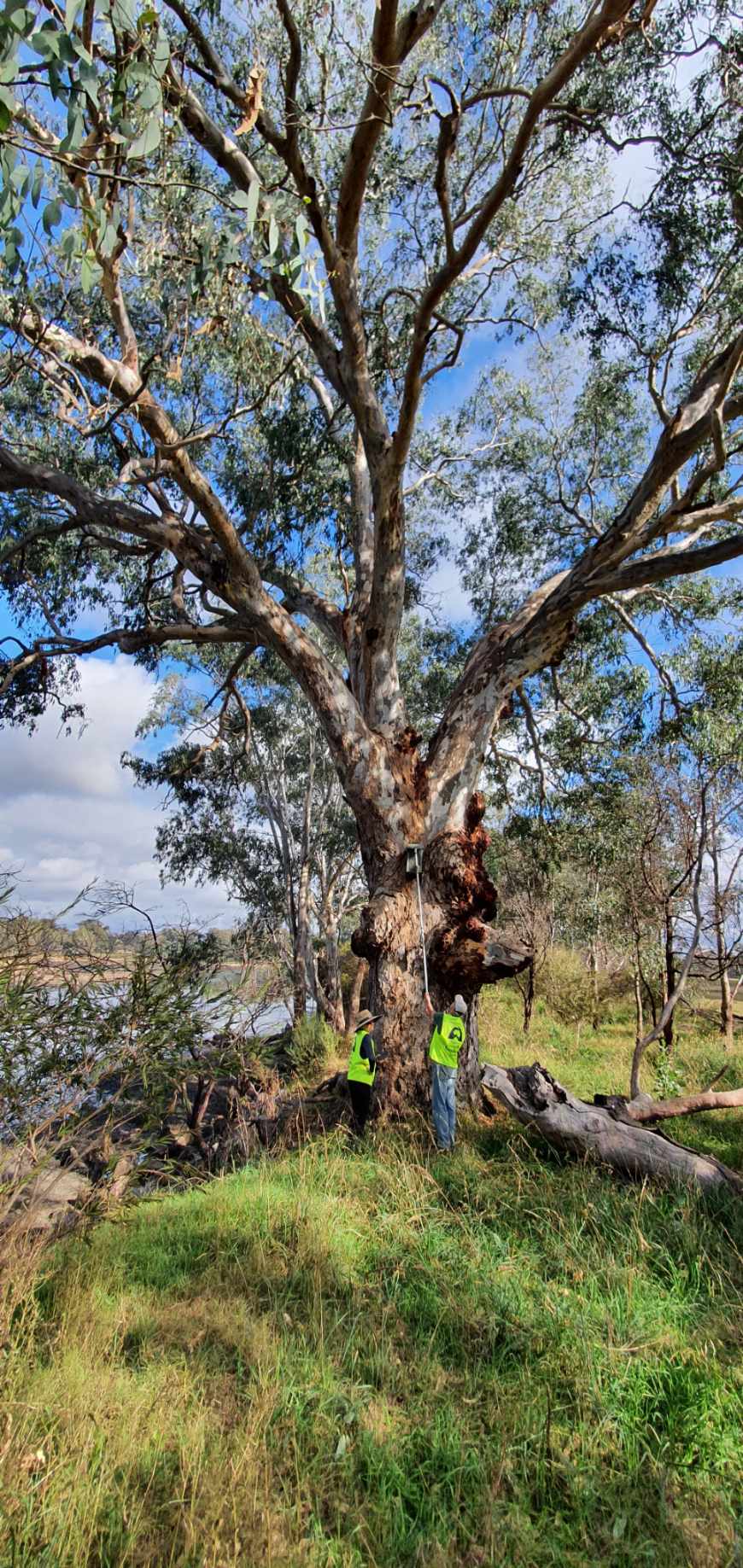
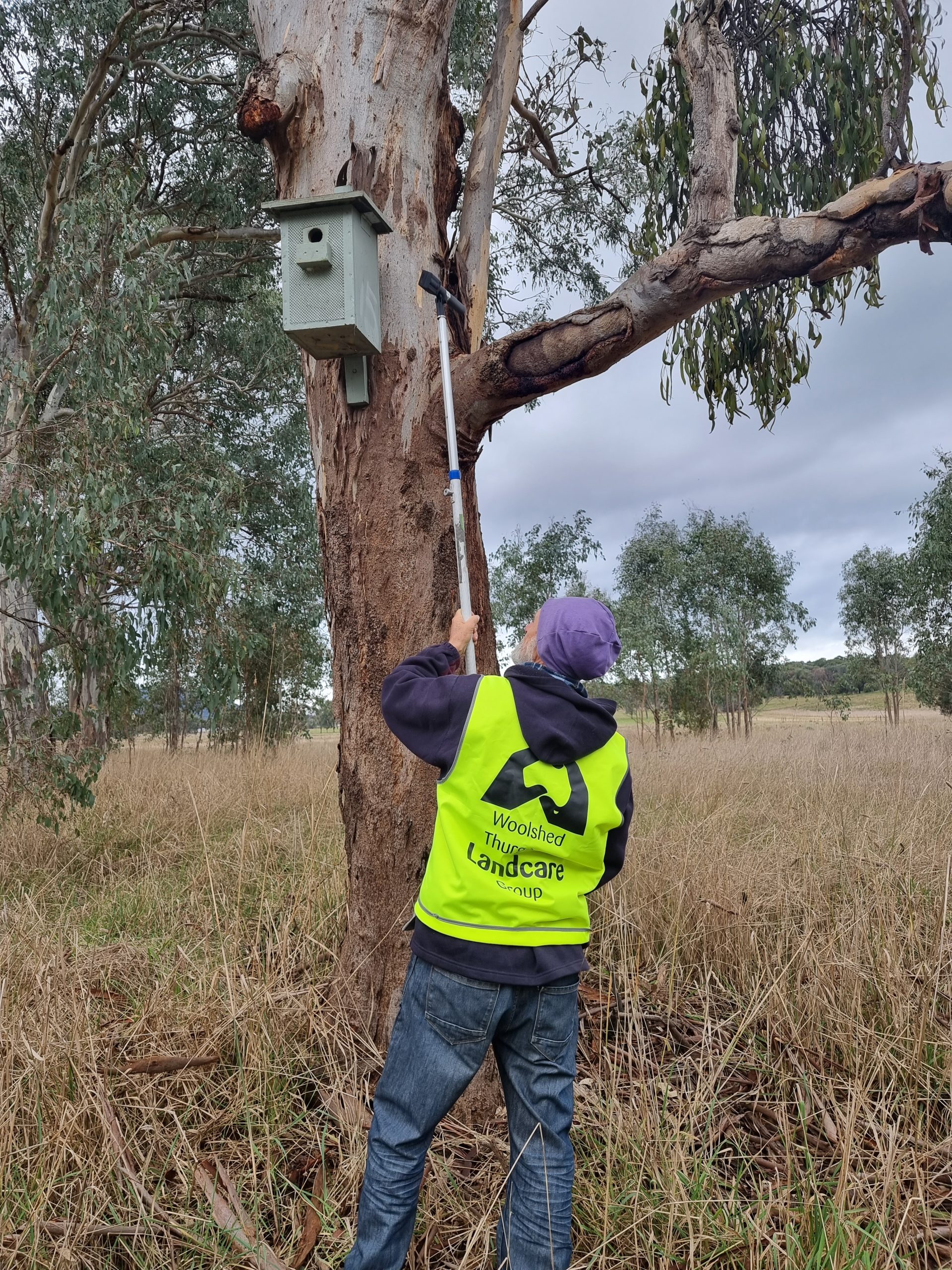
WTLG volunteers work with our local Landcare Co-ordinator to assess each site for suitability, install and monitor the nest boxes, to record important data, and to repair or replace nest boxes as needed.
Squirrel gliders are nocturnal, hollow-dependent mammals that are rarely seen but occur throughout our local area. They are members of the possum family, and are listed as a vulnerable species in NSW under the Biodiversity Conservation Act 2016.
The main threat to their survival is land clearing for development. Removal of trees limits their ability to move around safely, and particularly the loss of mature trees with the natural hollows they need — features that can take more than 100 years to form.
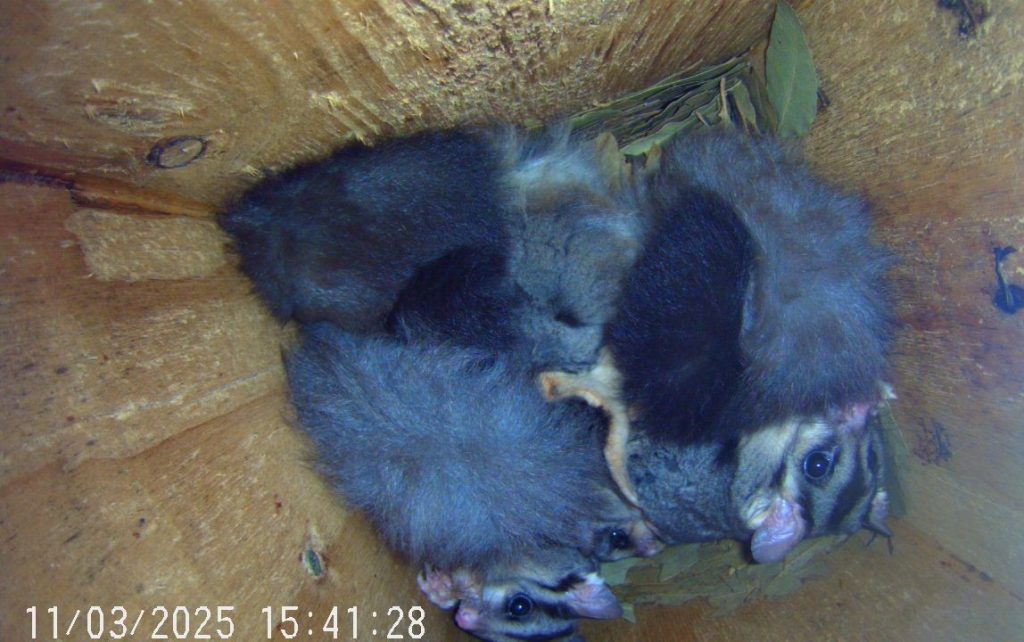
Nest boxes offer a practical and effective way to address the wildlife “housing crisis” created by vegetation loss, but nest boxes don’t last forever. Ongoing monitoring, repair and replacement of boxes together with re-vegetation with local native plants ensures suitable nesting and foraging habitat remains available for our target species. A biodiverse environment will ensure they have food all year round.
Squirrel gliders live in families, and use many different tree hollows to sleep and rest together. Because they must move around a wide area to find enough food, they need to locate as many large old hollow-bearing trees as possible. Their feeding range can be as big as 12 hectares, and they can travel up to 2 km in a single night.
Squirrel gliders often line their hollows with a distinctive bowl-shaped nest made from fresh gum and mistletoe leaves (which have antimicrobial properties) which they carry home curled under their tail.
They usually have 2 joeys in late autumn, but if environmental conditions are favourable they can breed at any time. Joeys are weaned at 5 months and become independent at 12 months.
Gliders move quietly through our landscape after dusk by clambering from treetop to treetop, or by spreading their limbs wide and gliding from tree to tree. A healthy adult may comfortably glide (or volplane) for 50 metres or more – but they need to climb up and launch from a very tall tree to reach a greater distance. They prefer to stay up in the treetops for safety – their main predators are cats, foxes, dogs, goannas, pythons and large owls. Barbed wire fences are a serious hazard as gliders can become fatally entangled in them. If you find a glider out of a tree, it needs help – call WIRES on 1300 094 737.
Brushtail possums eat young leaves, flowers and fruit, and also insects, fungi, bark and birds’ eggs. Sometimes they sleep in the forks of trees if they can’t find a hollow to hide in.
Ringtail possums eat eucalyptus leaves, flowers and fruit, and sometimes your roses! They build dreys which can be used by other wildlife. Both possums are also food for large owls.
A microbat can eat a thousand small insects every night. They can eat up to half of their bodyweight in beetles, moths, mosquitos, midges, flying termites and flies. Some eat spiders and cockroaches too, and some even skim along creeks to catch and eat insects and little fish.
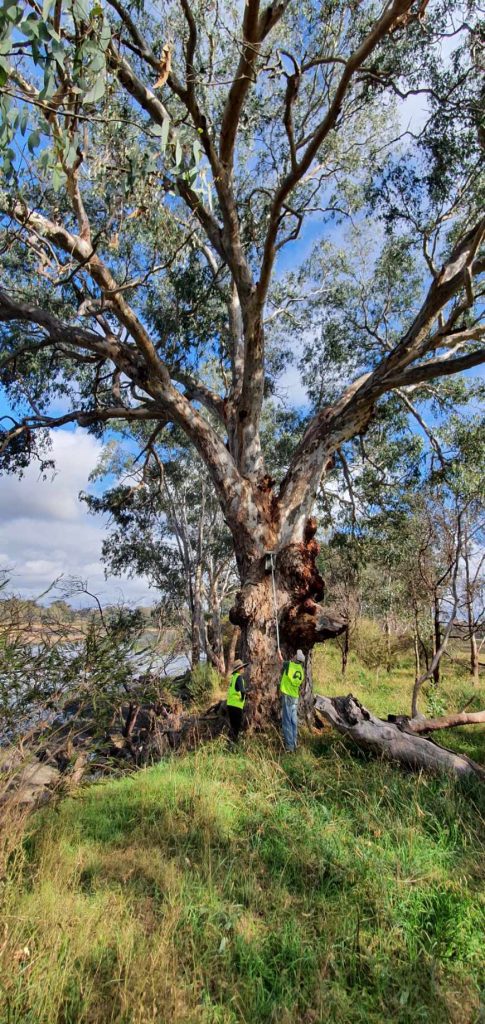
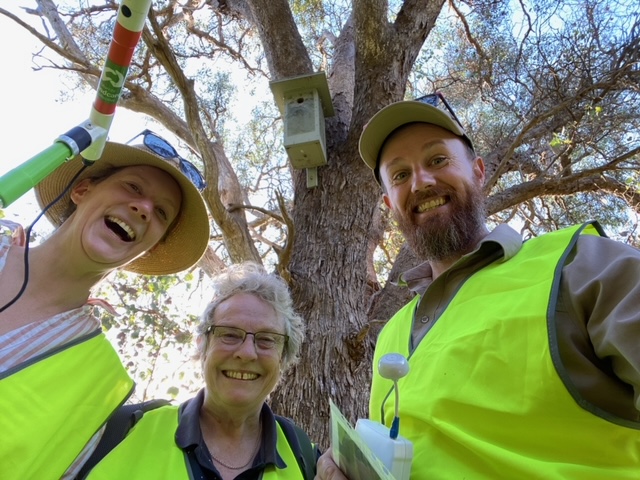
Squirrel gliders are very valuable to our environment because they eat many insects – caterpillars, moths, beetles, cicadas and wood-borers. This helps to prevent disease and fungal infections from spreading through the forest. They also dine on lerps, manna, pollen, nectar, honeydew and wattle sap. Their droppings enrich the soil. As they forage amongst the blossoms, they help to pollinate trees.
Brushtail possums disperse seeds through the environment via their droppings, their movement amongst blossoms pollinates flowers and they love to eat mistletoe, keeping it in check.
Like brushtail possums, ringtail possum droppings benefit the forest soils.
Microbats provide a valuable insect removal service, they reduce diseases spread by mosquitos, protect trees from being denuded by insects, and their droppings contribute to soil health.
We hold spring and autumn nest box monitoring events across the areas we are responsible for. TWLG volunteers use nest box cameras to record occupancy and box condition, currently monitoring around 194 boxes, some on behalf of Albury City Council. This data is analysed each time to see how the population varies with climatic and vegetation conditions.
The data supports the Albury Wodonga Threatened Species Monitoring Program, led by the Albury Conservation Company, and contributes to South West Slopes cumulative nest box records through our Local Landcare Coordinator.
When boxes are damaged or fall, our group is often called to respond, regardless of who installed them. Regular monitoring enables a proactive approach to maintenance, including:
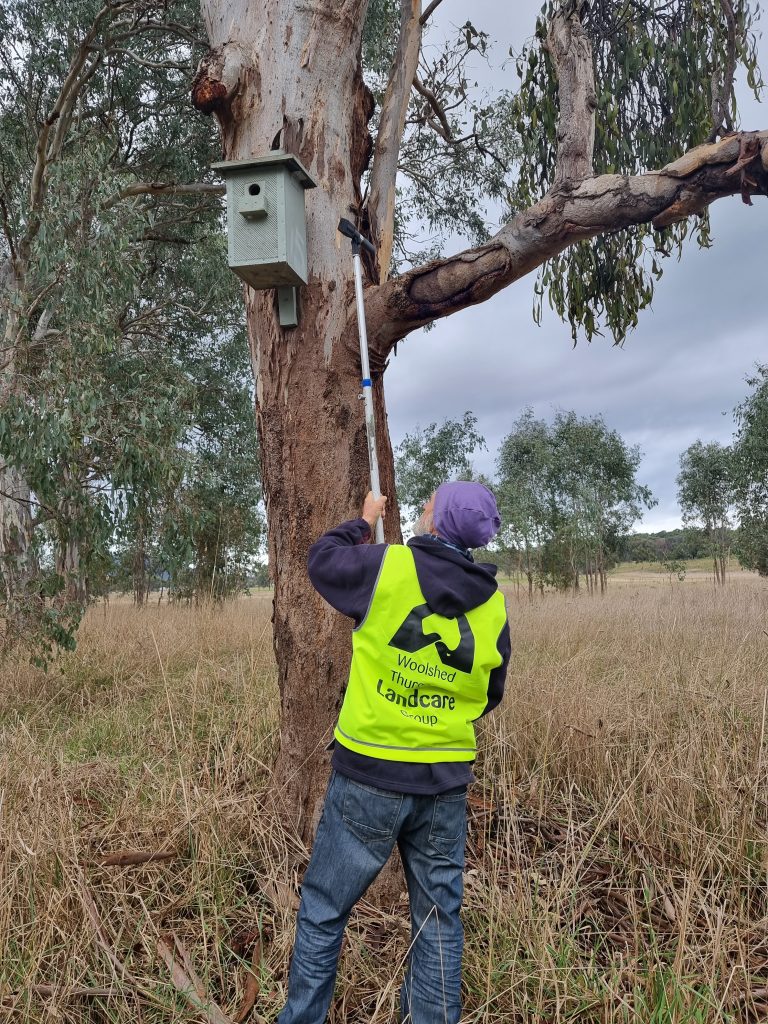
In 2024/25 our project installed, repaired or replaced 163 nest boxes around Lake Hume Village, Wirlinga and Thurgoona to help squirrel gliders.
Our monitoring data showed many boxes were occupied and many had fresh bedding in them brought by the gliders, indicating usage.
The local population appears to be stable, but numbers did not increase this year, possibly due to the severe drought conditions.
Working with private landowners and volunteers we directly engage the community with support of native species.
We appreciate grants from: