
Cat”s Claws Grevillea, Mountain Grevillea, Alpine Grevillea, Goldfields Grevillea, Mountain Grevillea
Proteaceae.
Grevillea.
Grevillea, after Charles Francis Greville (1749-1809), co-founder of London Horticultural Society. Alpina, from Latin alpinus, alpine, referring to habitat of some provenances (localities).
400mm+.
Moderate.
0.3-2m.
Noted only in Albury district.
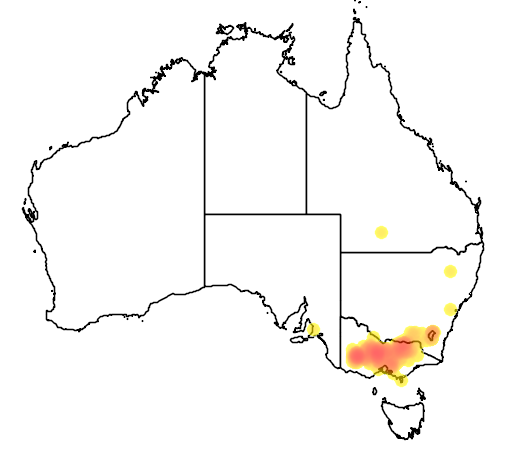
This specie has been identified in the following Australian states: Qld, NSW, Act, Vic, SA.
Dry sclerophyll forest or woodland, heath or mallee. Usually on sandy soil.
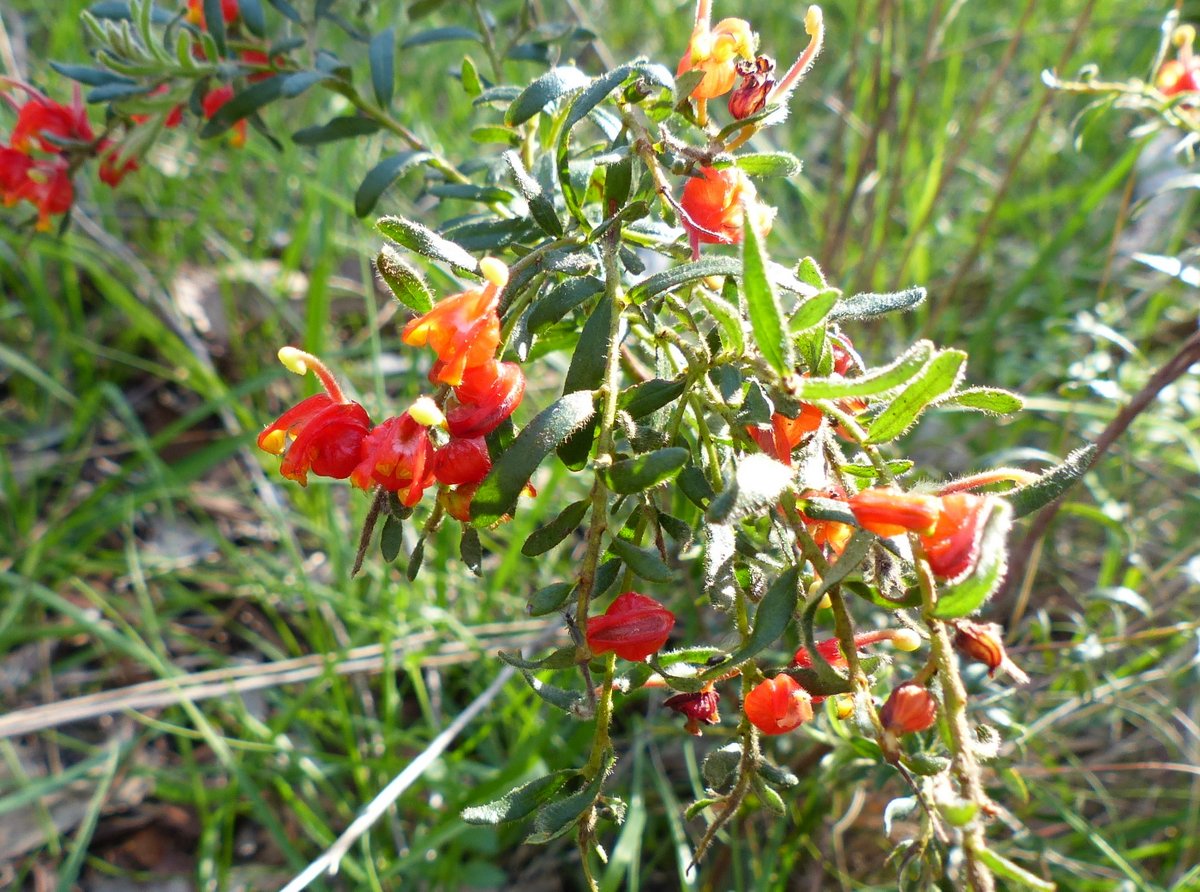
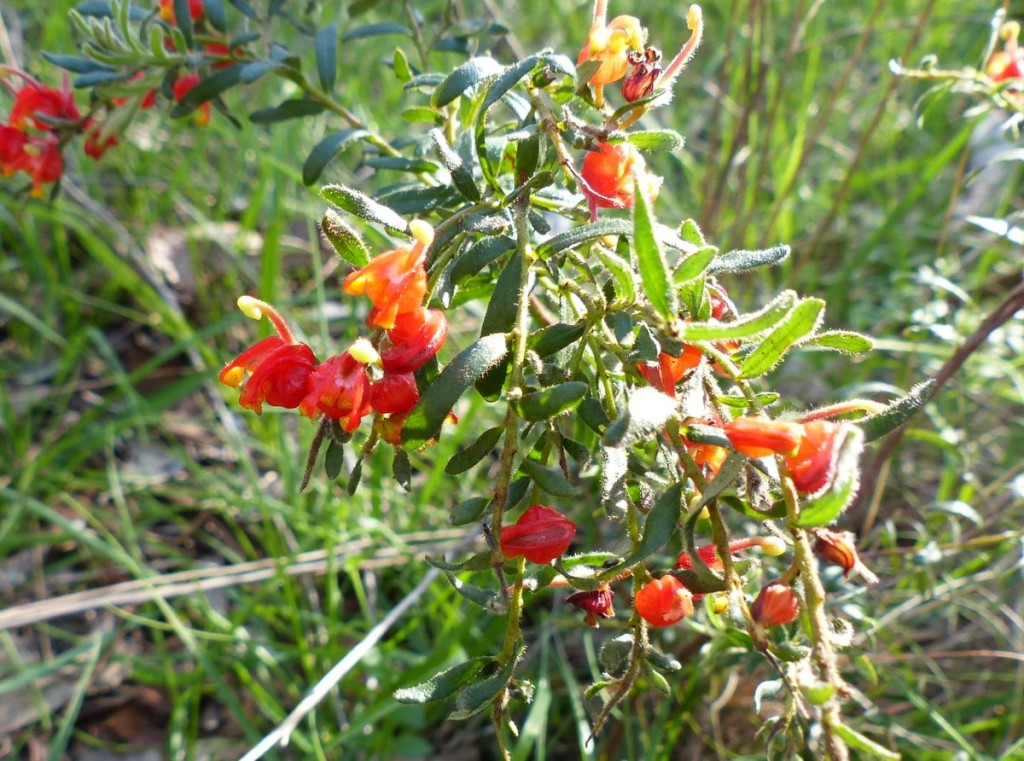
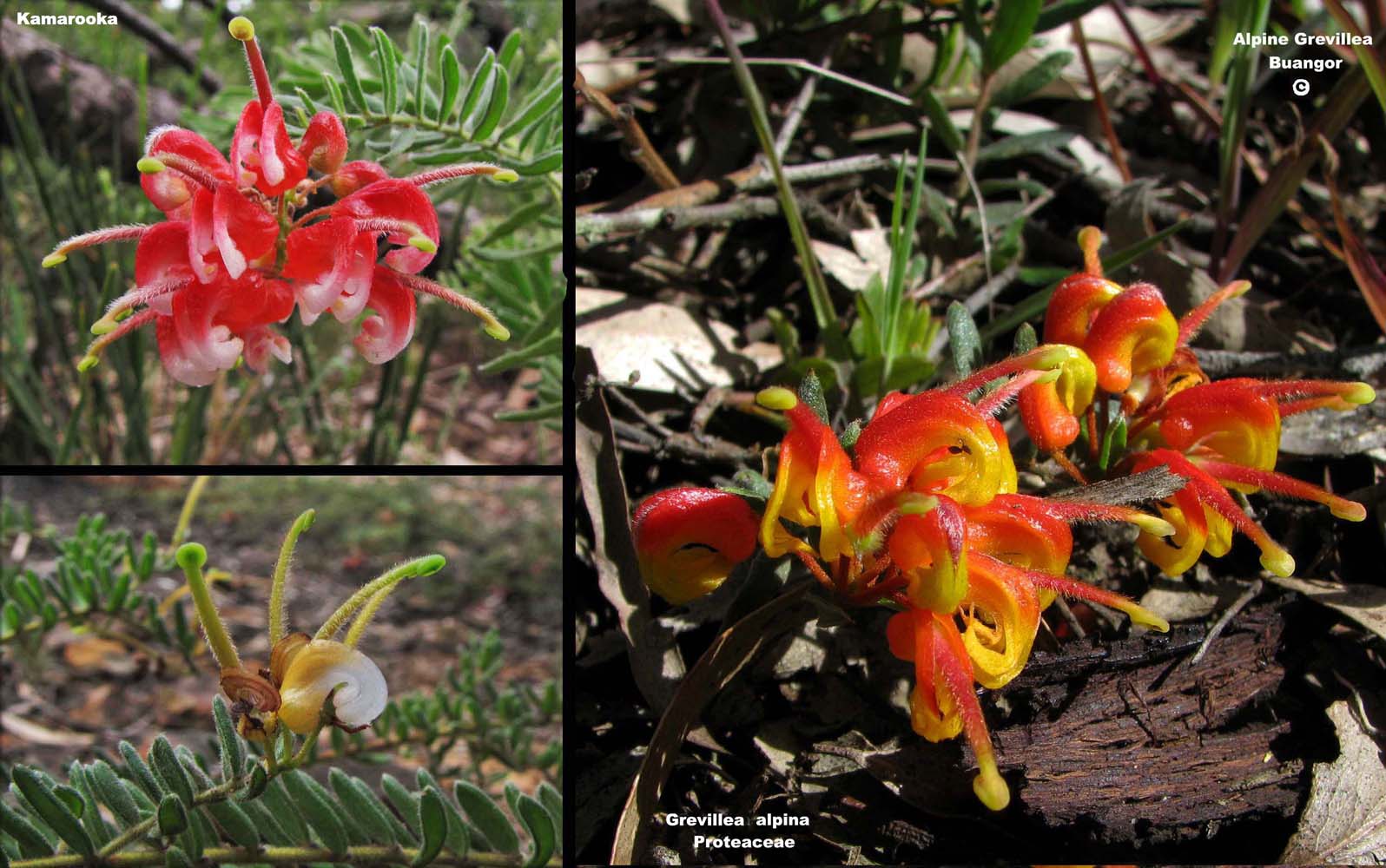
Spreading to semi-prostrate shrub 30cm to 2m high, with grey-green foliage.
Well-drained soil. Tolerates frost and extended dry periods.
Can be long-lived.
Bright red and yellow, mainly winter-spring.
Early Dec to late Feb. Monitor closely as seeds shed immediately or 1-2 days after maturity. Long season. Profuse and conspicuous.
From cuttings of fresh new growth, 5-7cm long, or from seed. Rooting hormones should improve strike rate.
From seed. Some provenances sucker.
Useful low-level cover in windbreaks.
Excellent habitat. Flowers are a nectar-source for native birds, particularly honeyeaters such as the Eastern Spinebill. Many native moths and butterflies attracted. Foliage provides nesting sites for small birds including the Yellow-tufted Honeyeater.
Attractive, popular ornamental for gardens and tubs. Prune to encourage bushiness.